Iconic races · Dates subject to confirmation
Cox Plate: understanding Australia’s weight-for-age championship
A middle-distance championship shaped by great horses and sharp decisions. Explore the Cox Plate’s heritage, its weight-for-age conditions and the important 2026 venue change.
QLD Racing Calendar editors · 4 min readPublished · Updated
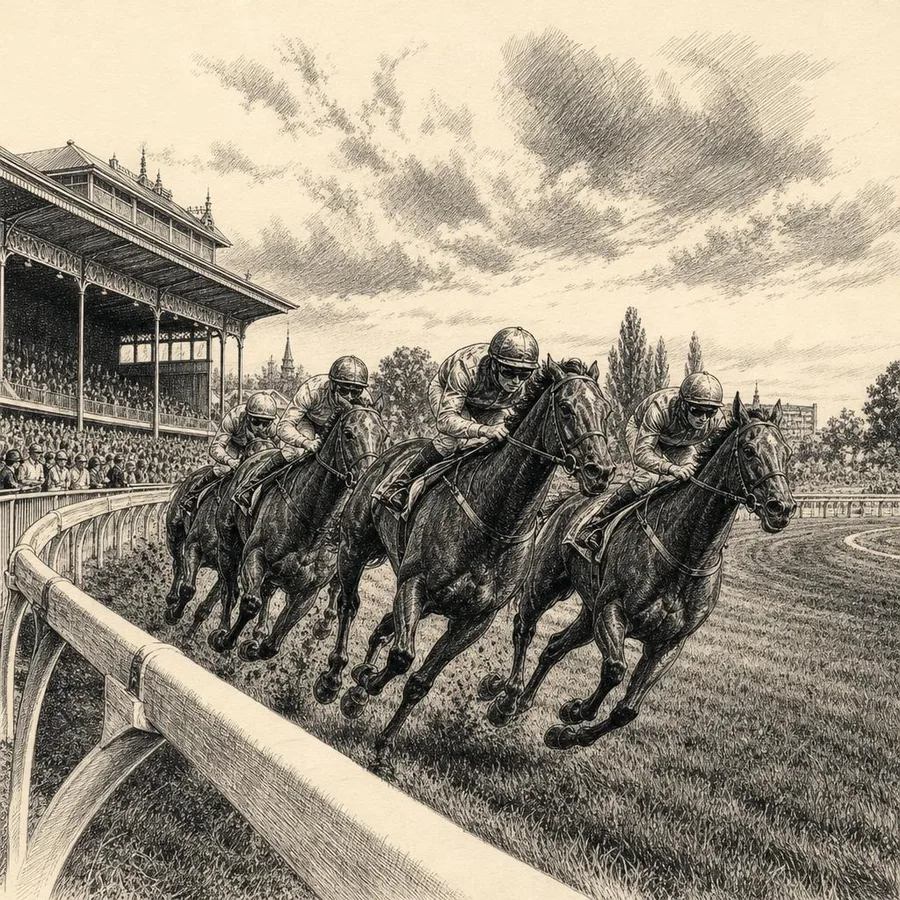
A championship with a distinct identity
The W. S. Cox Plate is a Group 1 middle-distance race established in 1922 and closely associated with the Moonee Valley Racing Club. Traditionally contested over 2040 metres, it is one of the defining events of the Australian spring. Where the Melbourne Cup tests staying ability under handicap conditions, the Cox Plate brings leading horses together under weight-for-age rules. It is our second iconic-race selection because of that contrasting sporting question, not because there is a single official ranking of Australia’s best races.
An important note about the 2026 venue
Do not assume that an article mentioning the Cox Plate automatically describes a race at Moonee Valley. Racing Victoria confirmed Flemington as the host of the 2026 Cox Plate, scheduled for 24 October, while The Valley underwent redevelopment. The announced race distance remained 2040 metres. The illustrations in this guide evoke the race’s traditional setting and preparation; they are not documentary images of the 2026 running. Future editions should always be checked against their own published venue and program.
Weight-for-age is not the same as equal weights
Weight-for-age conditions use a prescribed scale based on factors such as age, sex, distance and time of year, rather than assigning a bespoke handicap simply to even up each runner’s assessed ability. That distinction makes the race particularly interesting when younger horses meet older rivals. It does not make the outcome automatic or prove that the most famous horse will win. How a runner handles the pace, settles and responds when challenged still determines what happens on the track.
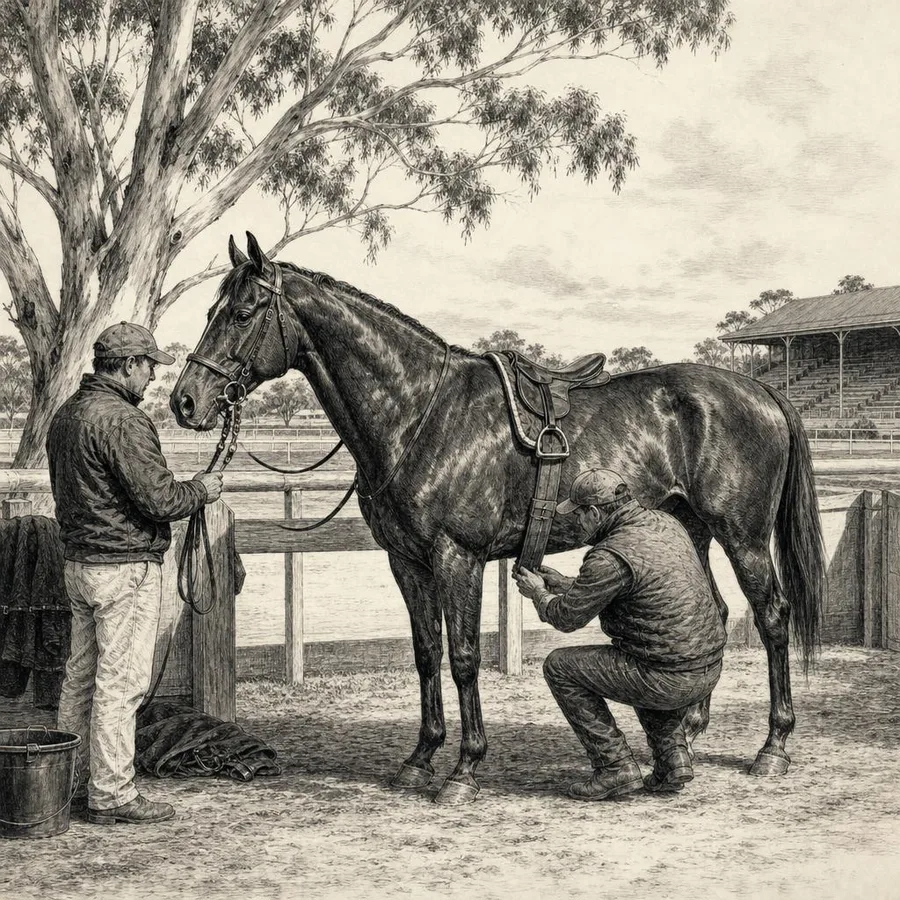
Why the traditional Valley course mattered
The Cox Plate’s identity was shaped by the intimacy of Moonee Valley: spectators close to the horses, turns that demand balance and a finishing straight that leaves little time for hesitation. Watching older editions is a lesson in timing. A jockey may need to choose when to improve position before the straight is reached, rather than waiting for an open invitation late. Those course-specific lessons should not be transferred unchanged to a different venue, including the 2026 Flemington edition.
Champions give the race its memory
Kingston Town won three consecutive Cox Plates from 1980 to 1982. Winx later took the record to four consecutive victories, from 2015 to 2018. Their achievements help explain why a Cox Plate campaign carries such emotional weight for racing followers. But the championship is more than its best-known winners. Replays also reward attention to the other runners, the changing positions around the bend and the work of trainers and stable teams in bringing a horse to a demanding spring target.
What to watch and what to confirm
For a first-time viewer, follow one horse from the mounting yard through to the start, then notice where it travels in relation to the leaders. Is it relaxed? Does it have cover? When does its jockey begin asking for an effort? Those observations make the race easier to understand without needing a betting opinion. Confirm the current venue, date and field separately. The linked RacingReady guide is additional background reading, and venue-specific or year-specific claims should be checked against the current club announcement.
Official sources
- Racing Victoria and VRC — 2026 Cox Plate host announcement